

Two of the most talked about therapies right now involve NAD+ and peptides. Both of which are said to support energy, healthy ageing, recovery and cellular function. And, naturally, because the two are often discussed together, many people ask the same question: Is NAD+ a peptide?
The short answer is no. Although both have an important role in human biology, they’re different molecules with varying functions in the body.
In this article, we delve into them in more detail to understand how the two work together and why knowing about their differences could help you when it comes to modern wellness and longevity.
What is NAD+?
NAD+ stands for nicotinamide adenine dinucleotide, which is a coenzyme found in every living cell in the body. Essentially, a coenzyme helps enzymes carry out their tasks in the body, and without enough NAD+, many of the body’s most important cellular processes would struggle to function efficiently.
NAD+ plays a critical role in:
- Cellular energy production
- Mitochondrial function
- DNA repair
- Cellular communication
- Metabolic processes
- Healthy cellular ageing
Studies show that NAD+ levels naturally decline with age, which is just one reason that interest in NAD+ support has increased in recent years.
At NAD+ At Home, we have multiple resources online that discuss NAD+ therapy options in more detail, including mobile and at-home NAD+ support services.

Is NAD+ a Peptide?
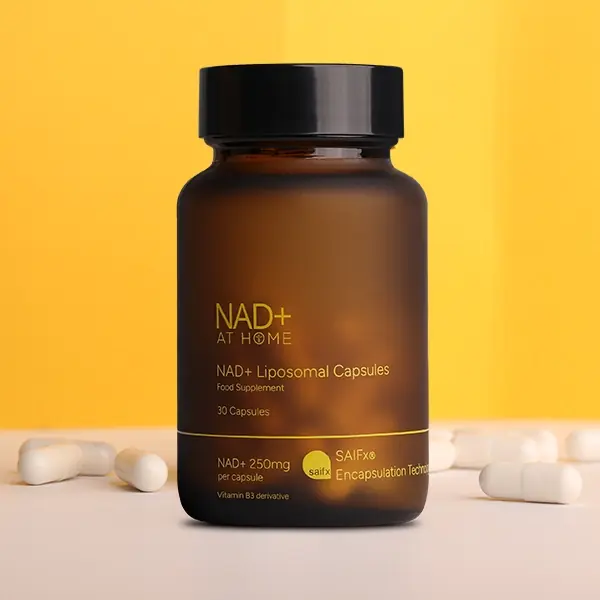
No, NAD+ is not a peptide. NAD+ is a coenzyme, while peptides are short chains of amino acids. While they both have a role to play in important biological functions, they’re different types of molecules.
In short, NAD molecules help facilitate other cellular reactions while peptides often act as signalling molecules communicating instructions throughout the body.
What Is a Peptide?
Peptides are short chains of amino acids, ultimately acting as the building blocks of protein. They act as biological messengers, helping cells communicate and regulating various functions around the body. This includes:
- Hormone regulation
- Tissue repair
- Muscle growth
- Skin health
- Metabolism
- Cellular signalling
Peptides are able to target specific biological pathways, which is why there is growing interest in peptide therapy within wellness, fitness and recovery.
What Is the Difference Between NAD+ and Peptides?
Although NAD+ and peptides are often mentioned together, they do have differences when it comes to:
- Structure – NAD+ is a coenzyme composed of specific molecules, whereas peptides are short chains of amino acids linked together through peptide bonds.
- Biological function – NAD+ supports cellular energy production and various metabolic functions while peptides act as signalling molecules and influence physiological functions.
- Mechanism of action – NAD+ helps enzymes perform essential reactions involved in energy production, DNA repair and cellular maintenance. Peptides communicate instructions between cells and tissues, and target specific biological responses.
- Therapeutic applications – NAD+ therapy is often associated with cellular energy support, healthy ageing, recovery and metabolic health. Peptide therapy focuses on specific goals depending on the peptide involved such as muscle development, tissue repair or skin health.
Why Do People Confuse NAD+ and Peptides?
The main confusion arises because both NAD+ and peptides are often discussed together and come with both wellness and longevity benefits.
What’s more, they’re both associated with recovery, energy, performance and cellular health. However, while their target audience might overlap, the way in which they work is very different.
How Does NAD+ Work in the Body?
NAD+ has an important role in several cellular reactions including:
- ATP production (the body’s primary energy source). Without NAD+, cells become less efficient at producing energy.
- Mitochondrial health. Mitochondria rely on NAD+ to support normal energy metabolism.
- Oxidative stress management. NAD+ is involved in systems that help cells respond to oxidative stress and maintain balance.
- DNA repair. Several enzymes responsible for DNA maintenance need NAD+ to function properly.
- Sirtuin activation. NAD+ supports the activity of sirtuins, a family of proteins that play important roles in healthy aging and cellular regulation.
Why Do People Use NAD+ Therapy?
As mentioned, people who use NAD+ therapy typically have goals related to wellbeing and healthy ageing, including:
- Supporting energy levels
- Enhancing recovery and cognitive performance
- Addressing feelings of fatigue
What Is Peptide Therapy?
Peptide therapy uses specific peptides to influence targeted biological processes. This means that peptide therapy can vary widely because different peptides serve different peptide functions, including:
- Recovery support
- Tissue repair
- Hormonal signalling
- Metabolic regulation
- Skin health
- Performance-focused goals
Unlike NAD+, which is involved in broader cellular processes, peptide therapy is often used in relation to specific physiological pathways.
Can NAD+ and Peptide Therapy Be Used Together?
Yes, and many people do explore NAD+ and peptide therapy as complementary wellness strategies. However, it’s important that if you do, you do so under professional guidance. This is because whether or not you are suitable for therapy depends on individual circumstances.
What Does Research Say About NAD+?
Interest in, and therefore research into, NAD+ is still evolving. But in recent years, it has focused on NAD+ and the relationship between age, cellular health, energy and mitochondrial function.
We know that NAD+ levels decline with age, so researchers have begun to look at how this might impact overall cellular function.
Findings are promising, more needs to be done, especially to fully understand the long-term effects and potential applications of NAD+.
Who Might Consider NAD+ Therapy?
NAD+ therapy can be used by many people, but some of the most common groups include:
- Busy professionals seeking wellbeing support
- Individuals experiencing low energy
- Wellness-focused consumers
- Healthy ageing enthusiasts
- Biohackers interested in cellular optimisation
- People exploring preventative wellness strategies
NAD+ vs Peptides
NAD+ is a coenzyme that’s involved in cellular energy production, DNA repair and mitochondrial function, to name a few. In contrast, peptides are short chains of amino acids that act as signalling molecules within the body. Despite this, the two are frequently discussed together.
What’s more, as research in health ageing and recovery grows, it’s likely that interest in NAD+ and peptides will also soar.
Disclaimer! Whether you’re exploring NAD+ therapy, peptides, or other wellness approaches, professional guidance and evidence-based information remain essential.
Related Blogs
Check out our latest articles.

Georgina Glenn • September 18th 2026

Georgina Glenn • August 11th 2026

Georgina Glenn • August 10th 2026
Georgina Glenn • September 18th 2026
Georgina Glenn • August 11th 2026


 English (UK)
  Arabic
  Spanish
  German
  French
  English (United States)
  English (Australia)